Pre-Spanish Natives in Loreto, BCS:
Until the Spanish missionaries arrived, the native population were Guaycura Indians from Loreto area north, Cochimi to the south to La Paz, 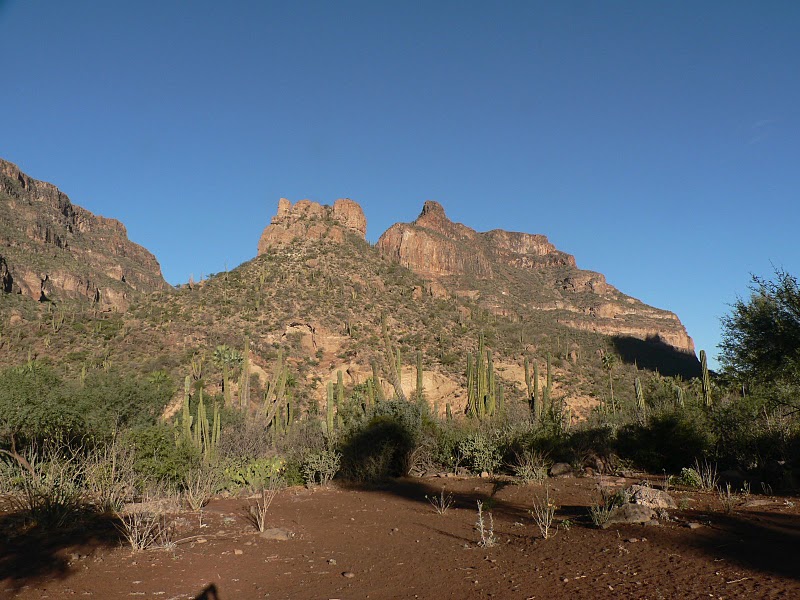 and the Pericu from there south to the tip of the peninsula. These tribes are essentially gone, victims of disease and mistreatment. They knew the Sea of Cortez and the surrounding mountains, and lived off the abundant richness of both. They left behind some interesting cave paintings, but relatively little hard record, due to the nature of their way of life.
See the page on Mulege for more information about cave paintings.
Evidence of early human habitation is found in primitive rock and cave paintings dating to 1700 BCE, created by hunting and gathering societies that lived in rock shelters. The state is one of five areas in the world with important concentrations of cave paintings. These painting have an identifiable style and tend to be on a monumental scale with some figures as tall as four meters. Most of the animals are painting in silhouette and depicted in movement, often being hunted by people. The best known site is the Great Mural Rock Art which dates from 1700 BCE, located in the north of the state. Other important sites include Cueva de Palma, San Gregorio, Santa Teresa, Guadalupe, San Francisco, Cabo Pulmo, Santiago and San Borjita.Baja California Sur[17] The most important concentrations are in twelve square kilometer zone in the north of the state, centered on the Sierra de San Francisco. In sites near Comondú, Las Palmas and Cocheros, there are also arrowheads, utensils and petroglyphs.[18] Las Palmas contains secondary burials of human bones painted with red ochre.Baja California Sur
When the Spanish arrived, there were four main ethnic groups: the Pericúes in the south between Cabo San Lucas and La Paz, the Guaycuras in the area north of the Pericú to Loreto, the Monquils near Loreto and Cochimí in the middle of the peninsula. All were hunter/gatherers without agriculture or metalworking, but produced pottery. They also fished, but only the Pericúes had rafts —Wikipedia
Save